
Halls sits in northeast Knox County's lake-humidity belt, where Norris Reservoir evaporation, Clinch River valley airflow, and red clay collide under decades of vented ranch crawls. Unlike flatter North Knox suburbs, many Halls Crossroads and Maynardville Highway (TN-33) lots grade toward ravines or lake arms, so roof runoff and hillside seeps reach block walls before ground vapor ever becomes the main problem. We encapsulate northeast Knox homes with drainage-first planning, moisture logging, and quotes typically in the $5,000–$15,000 range.
The Norris Lake Humidity Belt
Norris Lake is a TVA-managed reservoir; large surface water to the north and west of Halls adds latent moisture that inland Powell lots do not see at the same intensity. Summer air off the lake carries higher absolute humidity than Knoxville basin readings suggest. Open crawl vents do not dry that air out, they import it. Condensation forms on cool joists and metal ducts, and RH in vented crawls along the Norris corridor often sits in the mid-70s to 80s through July and August.
East Tennessee building science is clear for this microclimate: stop venting humid outdoor air, seal the ground with reinforced liner, and run a commercial dehumidifier sized for the footprint. Read why vents fail here: encapsulation vs ventilation in Knoxville humidity.
Hillside Lots, Gutters & Crawl Flooding
Northeast Knox topography is rolling. Homes on slopes toward Beaver Creek tributaries, lake coves, or wooded ravines frequently see water enter at the uphill crawl wall, not just from bare soil. Gutters that dump beside the foundation, downspout extensions missing on older ranches, and clay that sheds surface water faster than it absorbs all push liquid water inward during Tennessee Valley thunderstorms.
Encapsulation film goes down only after bulk water is managed. We coordinate interior drainage and sump pumps and foundation waterproofing on hillside Halls scopes where grading works against the crawl. Powell's flatter suburban lots more often fight ground vapor first; Halls jobs disproportionately start with drainage assessment.
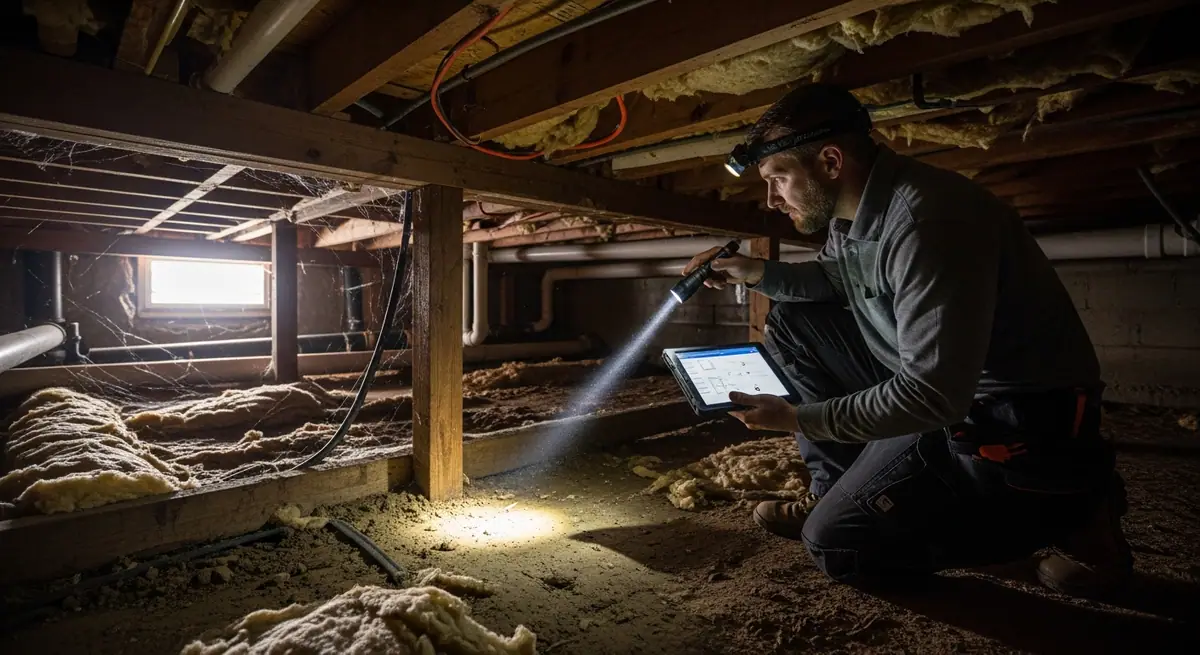
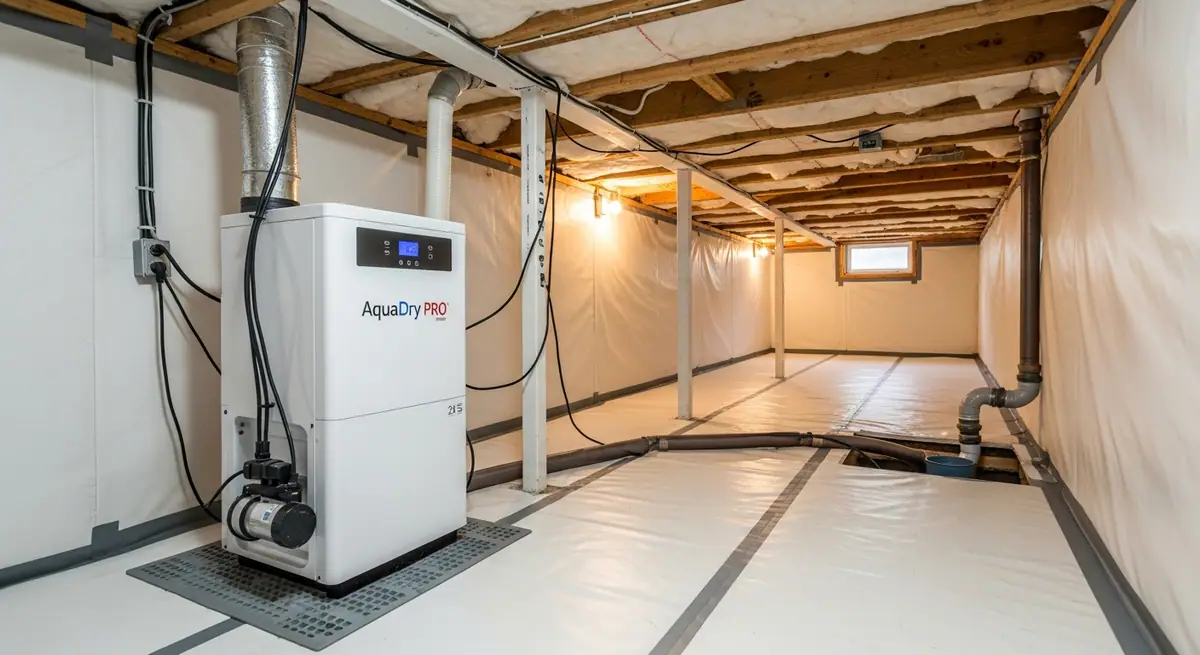
Halls Crossroads Housing: What We See Underground
The Halls Crossroads census area and corridors toward Corryton, Plainview, and Andersonville skew 1970s–1990s ranch and split-entry plans with low-clearance crawls, original fiberglass batts touching soil, and HVAC ducts resting on the ground. Block stem walls are common; pier counts are moderate compared to Farragut estates but duct obstructions and tight access add labor versus newer slab-on-grade builds.
Many owners commute toward Oak Ridge or Knoxville and only notice musty air when the heat pump runs after a humid weekend at the lake. Others call when a buyer's inspector cites mold on joists in zip 37766, northeast Knox disclosure forms now routinely include crawl moisture questions.
Encapsulation & Moisture Services in Halls
- Full crawl space encapsulation, liner, wall seal, vent closure
- Interior French drains & sump pumps for hillside inflow
- Foundation waterproofing on clay expansion & block walls
- Vapor barrier installation with pier and footing wraps
- Mold remediation before sealing
- Commercial dehumidifiers sized for Norris-belt humidity
Median Halls scopes track the Knoxville MSA at ~$8,500 inside $5,000–$15,000. Pricing factors: 2026 cost guide. Clay mechanics: why crawls fail on Knoxville clay.
Northeast Knox Communities We Serve
Halls proper and Halls Crossroads, Corryton approaches, Plainview, Bethel, Andersonville, corridors on Maynardville Highway (TN-33) and Emory Road toward Gibbs, and lake-adjacent pockets between Halls and Norris. Zip 37766 is core territory; we also reach northeast Knox addresses bordering Anderson County with no travel surcharge on standard inspections.
Halls, Oak Ridge & the Anderson County Line
Oak Ridge crawls share Anderson County clay and mid-century stock but add federal-era housing density and Melton Hill Lake hillside patterns. Halls remains Knox County with a stronger Norris Reservoir humidity signal and more commuter-ranch stock toward TN-33. Radon and limestone-belt questions surface more often on Oak Ridge jobs; Halls jobs more often start with lake-season humidity and hillside drainage. Both need sealed, dry crawls, different prep emphasis.
For flatter North Knox subdivisions and I-75 moisture patterns, see Powell encapsulation, Powell fights suburban ground vapor and resale inspections more than lake evaporation. Parent overview: Knoxville encapsulation.
Seasonal Moisture: When Halls Crawls Get Worse
- Spring (March–May): saturated clay after valley storms; hillside runoff peaks
- Summer (June–August): Norris evaporation + vented crawls = peak RH and mold growth
- Fall (September–November): hurricane remnants push Gulf moisture up I-75; lingering crawl dampness
- Winter: stack effect pulls crawl air upstairs; cold floors if insulation failed in humid crawls
DIY checklist before calling: homeowner crawl inspection checklist. Photos from northeast Knox jobs: before & after gallery.
Knox County licensed & insured · Serving Halls since 2012. Call 865-344-5507 or request an inspection.